
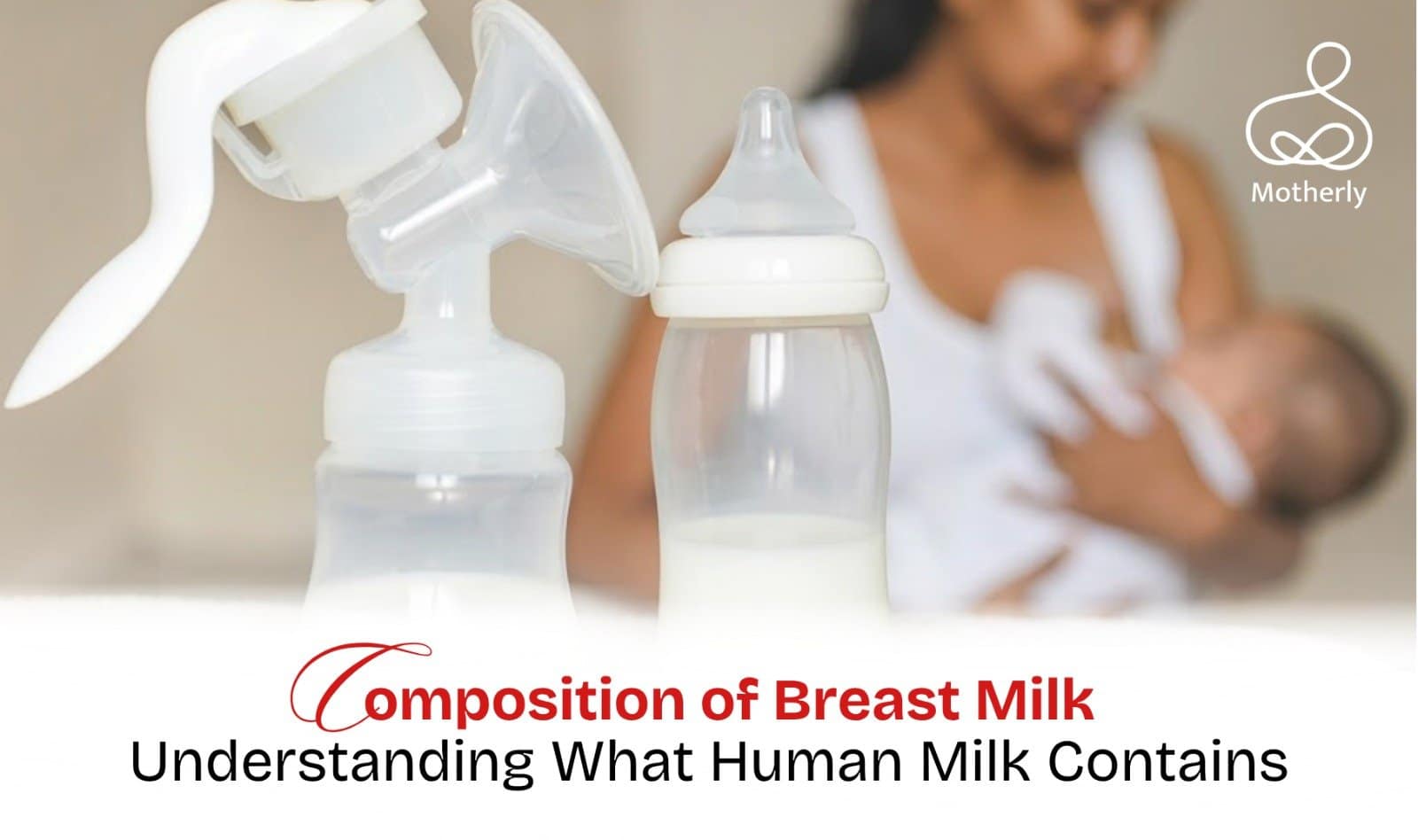
Composition of Breast Milk: Understanding What Human Milk Contains
Every piece of content at Motherly is created with care, compassion, and a commitment to accuracy. Our team ensures that every article, guide, and insight reflects the highest standards of medical integrity, clarity, and empathy. To learn how we maintain trustworthy, evidence-based information that supports your parenting journey, explore our content review principles.
Composition of Breast Milk: Understanding What Human Milk Contains
When a mother begins breastfeeding, she’s providing far more than simple nutrition she’s delivering a living, dynamic fluid that changes continuously to meet her baby’s evolving needs. Understanding the composition of breast milk reveals the remarkable intelligence of nature’s perfect food.
What Human Milk Contains: The Core Components
Human breast milk composition is extraordinarily complex, containing over 200 distinct components. The primary elements include:
Proteins: The protein in human milk ranges from 0.9 to 1.2 grams per 100ml, significantly lower than cow’s milk but perfectly calibrated for human infant digestion. The breast milk protein profile is dominated by whey proteins (60-70%) and casein (30-40%). What kind of protein is present in breast milk includes lactoferrin, immunoglobulins, lysozyme, and alpha-lactalbumin each serving specific protective and developmental functions.
Fats: Comprising 3-5% of milk volume, fats provide approximately 50% of the infant’s caloric intake. These essential fatty acids, including DHA and ARA, are crucial for brain and eye development.
Carbohydrates: Lactose is the primary carbohydrate, providing energy and supporting calcium absorption and beneficial gut bacteria growth.
Vitamins and Minerals: Human milk contains all necessary vitamins and minerals in bioavailable forms, though vitamin D supplementation is often recommended.
Bioactive Components: Antibodies, enzymes, hormones, and growth factors make breast milk a living substance that actively protects and nurtures the infant.
How Much Protein in Breast Milk: Understanding the Numbers
New mothers often ask, “how much protein in mothers milk?” The answer isn’t static. Mature milk contains approximately 0.9-1.1 g/100ml, but this varies significantly:
- Colostrum (first 2-5 days): 2.0-2.5 g/100ml
- Transitional milk (days 6-14): 1.5-1.8 g/100ml
- Mature milk (after 2 weeks): 0.9-1.1 g/100ml
This decreasing human milk protein content might seem counterintuitive, but it reflects the changing needs of the growing infant. Newborns require concentrated immune proteins, while older babies need more energy from fats and carbohydrates.
The Three Phases of Breast Milk
1. Colostrum: Liquid Gold (Days 1-5)
Colostrum is thick, yellowish, and produced in small quantities perfectly matched to a newborn’s tiny stomach. The components of breastmilk during this phase are heavily weighted toward immune protection:
- Mother milk protein concentration is highest
- Rich in antibodies (IgA) that coat the infant’s digestive tract
- Contains high levels of white blood cells
- Acts as a natural laxative to help pass meconium
- Lower in fat and lactose than mature milk
The nutritional value of breast milk in this phase prioritizes immune function over calories, giving the newborn critical protection during their first vulnerable days.
2. Transitional Milk (Days 6-14)
As milk “comes in,” mothers notice dramatic changes. Mother milk contains increasing amounts of:
- Fat content rises
- Lactose increases
- Overall volume expands significantly
- Protein concentration gradually decreases
- Caloric density increases
3. Mature Milk (Week 2 Onward)
By two weeks postpartum, breastfeeding composition stabilizes into mature milk, though it continues to adapt. The breast milk contents now include:
- Consistent fat, protein, and carbohydrate ratios
- Foremilk (watery, thirst-quenching) and hindmilk (creamier, higher in fat)
- Antibodies specific to pathogens in the mother’s environment
- Enzymes that aid digestion
Dynamic Changes During Each Feeding
Human milk composition changes not just over weeks, but during individual feedings:
- Foremilk (beginning of feeding): Higher in lactose and protein, lower in fat
- Hindmilk (end of feeding): Higher in fat, more calorie-dense
This progression ensures the baby receives hydration first, then fills up on calorie-rich hindmilk for sustained satisfaction.
Adaptations to Baby’s Age and Needs
The composition of breast milk continuously adjusts:
- Premature infants: Mothers produce milk higher in protein and immune factors
- Illness: Antibody concentration increases when either mother or baby is sick
- Teething: Some research suggests subtle compositional changes during developmental milestones
- Weaning: As nursing decreases, milk composition shifts to become more concentrated in immune factors
Circadian and Seasonal Variations
Mother milk contains components that change throughout the day:
- Morning milk: Higher in cortisol to promote wakefulness
- Evening milk: Contains sleep-inducing nucleotides and tryptophan
- Summer months: Some studies suggest slightly higher water content
- Winter months: May contain more fat for additional calories
The Nutritional Value of Breast Milk Compared to Formula
While formula manufacturers attempt to replicate breast milk, they cannot match its dynamic nature. The nutritional value of breast milk includes:
- Living cells: White blood cells and stem cells (absent in formula)
- Personalized antibodies: Updated continuously based on the mother’s environment
- Enzymes: Aid digestion and nutrient absorption
- Hormones: Support metabolism and development
- Growth factors: Promote gut maturation and healing
How much protein in breast milk versus formula reveals another difference: formula contains 1.4-1.8 g/100ml to compensate for lower bioavailability, while the protein in human milk is perfectly digestible.
Factors That Influence Breast Milk Composition
Several maternal factors affect what mother milk contains:
- Diet: Directly influences fatty acid profile and some vitamin levels
- Hydration: Affects milk volume but not composition significantly
- Genetics: Determines baseline composition patterns
- Time of day: Creates natural circadian variations
- Breast fullness: Fuller breasts produce slightly more dilute milk
Supporting Optimal Breast Milk Composition
While human milk composition is naturally optimized, mothers can support quality through:
- Balanced nutrition: Ensures adequate vitamins and healthy fats
- Adequate hydration: Supports milk production volume
- Omega-3 intake: Enhances DHA content for brain development
- Vitamin D supplementation: May increase levels in milk
- Avoiding toxins: Reduces contaminant transfer
Understanding the Components of Breastmilk for Common Concerns
Thin-looking milk: Foremilk naturally appears watery this is normal Blue-tinted milk: Can occur with high-fat hindmilk perfectly normal Green-tinted milk: Often from dietary sources (green vegetables, supplements) Pink or rust-colored milk: Usually from small amounts of blood in early days (typically harmless)
The Bottom Line
The breast milk contents represent nature’s most sophisticated nutritional system. Human milk contains hundreds of bioactive components working in concert to nourish, protect, and develop the infant. The components of breastmilk change hour by hour, day by day, and month by month, always adapting to meet the baby’s current needs.
Understanding breastfeeding composition empowers mothers to trust their bodies’ remarkable ability to provide exactly what their babies need. While the science of human breast milk composition continues to reveal new complexities, one thing remains clear: breast milk is a living, intelligent food source that cannot be fully replicated.
Whether you’re curious about how much protein in breast milk or the broader nutritional value of breast milk, remember that your body is creating precisely calibrated nutrition for your unique baby, changing and adapting with every passing day.
In this article
Stay Updated with Motherly
Keep Reading
Composition of Breast Milk: Understanding What Human Milk Contains
When a mother begins breastfeeding, she's providing far more than simple nutrition she's delivering a living, dynamic...

Postpartum Care in Chennai: The Complete Guide for New Mothers
If you live in Chennai and you are searching for postpartum care in Chennai or postpartum care...
How to Increase Breast Milk SupplyAfter C-Section Delivery
The fear of insufficient milk after a caesarean is one of the most common and most distressing...