When Does Breast Milk Start During Pregnancy?
motherly·March 19, 2026
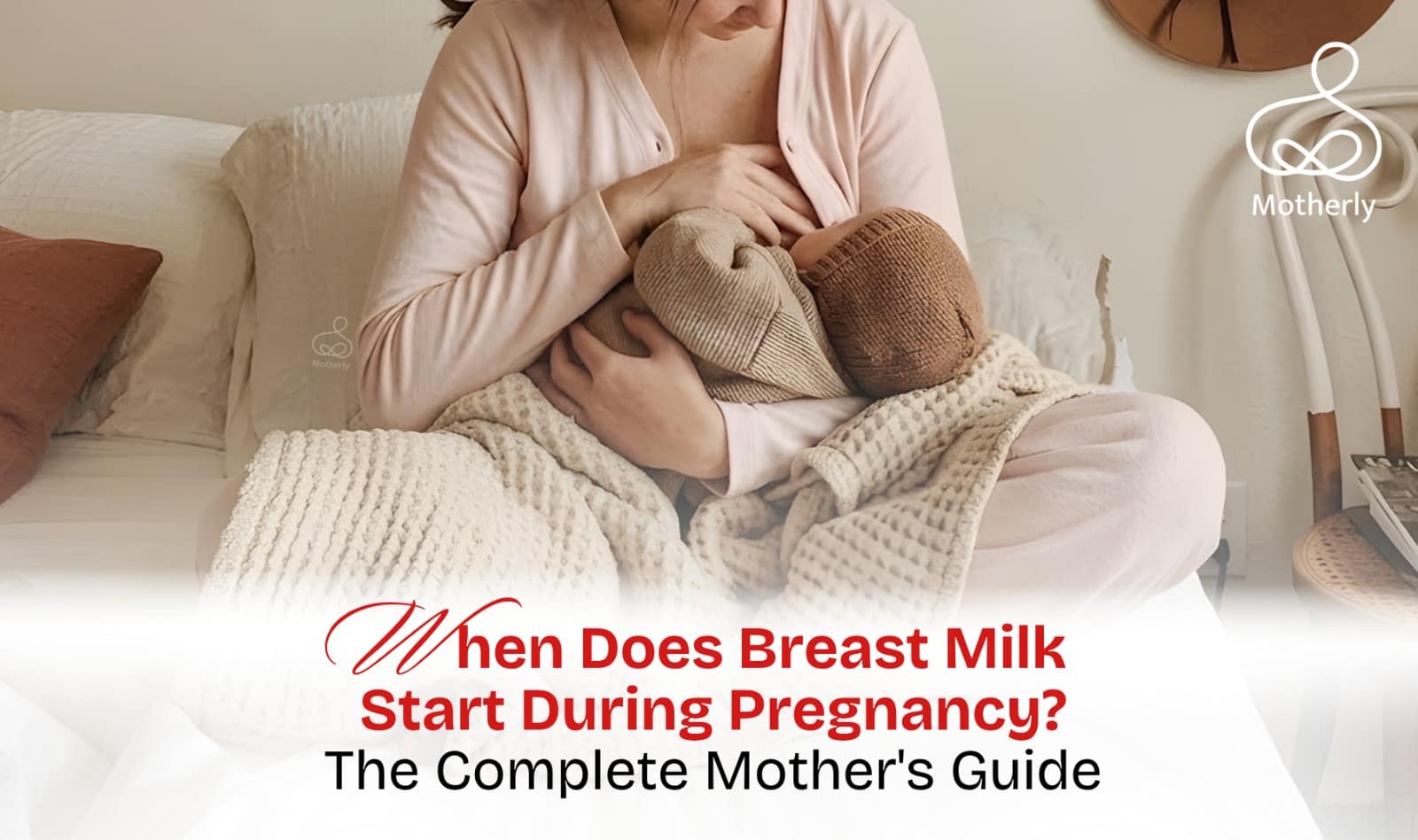
When Does Breast Milk Start During Pregnancy? A Month-by-Month Guide for Expecting Mothers
If you have ever found yourself searching for which month breast milk start during pregnancy, you are not alone. It is one of the most common questions expecting mothers ask which month breast milk start during pregnancy and one and one that is rarely answered clearly enough. This complete guide on which month breast milk start during pregnancy gives you the full picture: when breast milk starts, what your body is doing in each month of pregnancy to prepare for it, what colostrum is, and exactly what to expect in those first days after your baby arrives.
Motherly Fact-Checking Standards
Every piece of content at Motherly is created with care, compassion, and a commitment to accuracy. Our team ensures that every article, guide, and insight reflects the highest standards of medical integrity, clarity, and empathy. To learn how we maintain trustworthy, evidence-based information that supports your parenting journey, explore our content review principles.
When Does Breast Milk Start During Pregnancy? A Month-by-Month Guide
You are in your fifth month of pregnancy. You notice something unfamiliar — a small, yellowish drop on your bra. Your heart skips a beat. Is that milk? Is this normal? Am I supposed to have milk already?
If you are wondering when breast milk starts during pregnancy, you are not alone. It is one of the most common questions expecting mothers ask — and one that is rarely answered clearly enough. This complete guide gives you the full picture: when breast milk starts, what your body is doing month by month to prepare for it, what colostrum is, and exactly what to expect in those first days after your baby arrives.
Which Month Does Breast Milk Start During Pregnancy?
The direct answer is: your body begins producing colostrum — the first form of breast milk — from around Month 4 to Month 5 of pregnancy, approximately Weeks 16 to 22.
However, this does not mean your full mature milk arrives during pregnancy. What starts in months 4 or 5 is colostrum — a thick, concentrated, yellowish fluid that is technically breast milk in its earliest and most powerful form. Full, mature breast milk comes in 2 to 5 days after your baby is born, triggered by the delivery of the placenta.
Breast milk starts as early as Month 4. Your body begins preparing your baby’s first food long before they arrive.
Month-by-Month Breast Changes During Pregnancy
Here is what is happening in your breasts at every stage of pregnancy — from the first signs of change to the moment mature milk arrives:
| Stage | Breast Changes | Milk Status |
|---|---|---|
| Months 1–2 | Breasts become tender and sensitive. Veins become more visible. Nipples may darken. | No milk yet. Prolactin levels begin rising. Breast tissue starts preparing. |
| Month 3 | Breasts increase in size. Montgomery glands become visible around the nipple. | Colostrum begins in some mothers. Most do not notice yet. |
| Month 4 | Breasts feel noticeably heavier and fuller. Areola darkens further. | Colostrum begins for most mothers from Week 16 onwards. |
| Month 5 | Some mothers notice colostrum leaking. Breasts feel warm and full. | Colostrum is present — your body is actively producing your baby’s first food. |
| Month 6 | Colostrum leaking becomes more common. Breasts continue to enlarge. | Colostrum is fully formed and stored in the breasts, ready for your baby. |
| Months 7–9 | Breasts may feel heavy and sometimes leak. Areola is darker. Nipples more prominent. | Colostrum is fully ready. Breasts are prepared for full milk production after birth. |
| Days 1–5 after birth | Breasts fill rapidly. Engorgement possible as mature milk arrives. | Mature milk comes in. Colostrum transitions to full breast milk within 2–5 days. |
What Is Colostrum — Your Baby’s First Breast Milk?
Colostrum is the first form of breast milk — thick, sticky, and golden yellow in colour. It is produced from approximately Month 4 of pregnancy and is ready in your breasts by the time your baby is born.
Colostrum is often called “liquid gold” — and not just because of its colour. It is extraordinarily rich in immunoglobulins, antibodies, protein, and growth factors that a newborn needs in the very first hours and days of life. It is low in volume — measured in teaspoons, not ounces — but precisely matched to what a brand-new stomach can handle.
What Makes Colostrum So Powerful?
- Rich in secretory IgA — the antibody that lines your baby’s gut and protects against infection
- High in protein, low in fat — perfectly designed for a newborn’s kidneys to process
- Contains living white blood cells — a direct immune transfer from mother to baby
- Acts as a natural laxative — helps your baby pass meconium (first stool)
- Prevents jaundice by clearing bilirubin from the body
- Every drop counts — even 1–2 teaspoons per feed is enough for a newborn’s marble-sized stomach
Signs Your Body Is Preparing Breast Milk During Pregnancy
Recognising the physical signs that your body is preparing milk can be reassuring. These signs can appear from as early as the first trimester and gradually intensify as pregnancy progresses.
Colostrum Leaking
From Month 4–5 onwards, some mothers notice small drops of thick, yellowish fluid on their bra or during a shower. Not all mothers leak — absence of leaking does not mean absence of colostrum, and does not affect breastfeeding ability.
Breast Heaviness and Fullness
Your breasts may feel noticeably heavier and fuller from Month 2 onwards as glandular tissue develops and blood flow increases.
Darkening Areola
The area around the nipple darkens during pregnancy — believed to help newborns find the nipple more easily. One of the earliest visible signs of breastfeeding preparation.
Montgomery Glands Becoming Visible
Small bumps around the areola become more prominent from Month 3. They secrete an oily substance that keeps the nipple lubricated and has a scent that guides your newborn to the breast.
Breast Tenderness and Sensitivity
Often the very first sign of pregnancy, breast tenderness signals rising prolactin and oestrogen — the hormones that begin building your milk-making system from Month 1.
What Triggers Full Breast Milk After Birth?
During pregnancy, high levels of progesterone — produced by the placenta — suppress full milk production. This is your body’s way of ensuring milk does not flow until your baby is ready for it. The moment the placenta is delivered, progesterone levels drop sharply. Prolactin surges and triggers full milk production.
This transition happens within 2 to 5 days after birth. In the meantime, colostrum — which has been developing since Month 4 — is everything your baby needs. It is enough. It is the right food. Trust it.
Day 1–2
Colostrum Only
Thick, golden, in small volumes. Perfect for your newborn’s tiny stomach — precisely the right food for Day 1.
Day 2–3
Transitional Milk Begins
A mix of colostrum and mature milk. Volume increases. Breasts feel fuller.
Day 3–5
Mature Milk Comes In
Breasts feel noticeably fuller. Milk is more plentiful and whiter. This is the final transition from colostrum to full supply.
Week 2+
Supply Regulates
Your body settles into a supply rhythm calibrated to your baby’s specific needs. Full breastfeeding is now in operation.
How to Prepare for Breastfeeding During Pregnancy
Knowing that colostrum begins as early as Month 4 means you can use the remaining months of pregnancy to prepare for successful breastfeeding. Preparation does not mean stress — it means confidence.
1
Antenatal Colostrum Harvesting (from Week 36)
With your doctor’s approval, you can gently hand-express and collect colostrum in small syringes from Week 36. This gives you a stored supply for your baby’s first hours — particularly useful if there are any feeding challenges early on.
2
Learn the Latch Before Birth
Booking a prenatal consultation with a Motherly lactation consultant during pregnancy means you understand correct positioning and latch before your baby arrives — removing one major source of early feeding difficulty.
3
Support Your Body With Nutrition
From Month 4 onwards, support colostrum quality through good nutrition — protein, iron, calcium, and Vitamin D are especially important during this stage.
4
Update Your Bra
From Month 4–5, as colostrum begins and breasts grow heavier, switch to a well-fitted, wire-free maternity or nursing bra. Correct support protects breast tissue and significantly increases comfort.
5
Build Your Support Team
Having a certified lactation consultant identified and ready before birth means that when your mature milk comes in and any challenges arise, help is one tap away through the Motherly app.
Common Myths About Breast Milk During Pregnancy
Many fears about breastfeeding are rooted in myths. Here are the most common misconceptions — and the facts that replace them:
MythIf I am not leaking, I have no colostrum.
FactLeaking is not required for colostrum to be present.
The majority of mothers do not leak during pregnancy — but colostrum is still developing from Month 4. Not leaking is completely normal and does not affect breastfeeding ability.
MythSmall breasts mean less milk.
FactBreast size has no relationship to milk production.
Milk production is determined by glandular tissue — not fat tissue — and by the frequency of feeding after birth. Breast size plays no role in when milk starts or how much you produce.
MythIf my baby feeds constantly, I don’t have enough milk.
FactFrequent feeding is normal and actually builds supply.
Frequent feeding — including cluster feeding — is completely normal newborn behaviour. It does not indicate low supply. It actually stimulates your body to produce more milk. This is the supply-and-demand system working exactly as designed.
MythColostrum is not enough to feed my baby in the first days.
FactColostrum is precisely right for a newborn’s stomach.
A newborn’s stomach on Day 1 is the size of a marble. Small volumes of colostrum are exactly right. Trust what your body has been preparing since Month 4 of your pregnancy.
MythIf I struggled to breastfeed the first time, I will again.
FactEvery pregnancy and breastfeeding journey is unique.
With the right support — like a Motherly certified lactation consultant — many mothers who struggled the first time have an entirely different, positive experience the second time.
Get Expert Breastfeeding Support — Book Through Motherly
Understanding when breast milk starts during pregnancy is the first step. Preparing for breastfeeding with expert support is the second. Motherly connects expecting mothers with certified lactation consultants, gynaecologists, doulas, and postnatal care professionals — all vetted, all experienced, all available through one simple app.
Lactation Consultants
Prenatal preparation, colostrum harvesting guidance, and postnatal breastfeeding support.
Doulas
Emotional and physical birth support — before, during, and after delivery.
Postnatal Nannies
In-home newborn care so you can rest and focus on feeding.
Gynaecologists
Prenatal and postnatal health consultations, including guidance on breastfeeding during pregnancy.
Book Your Lactation Consultant Before Your Baby Arrives
Certified professionals available across Chennai — personalised support from pregnancy through your first feed and beyond.
Book on Motherly → Free to download · Android & iOS · Book in under 2 minutes · mothrly.comYour Body Already Knows What to Do
Breast milk starts as early as Month 4 of pregnancy — without being asked. No decision, no effort, no instruction required. While you have been growing your baby, your body has been quietly preparing the first food they will ever taste.
Colostrum has been building since the middle of your pregnancy. Mature milk is ready to flow within days of birth. Every stage is timed, every nutrient is chosen, every drop is meant for your baby.
Your job is simply to trust the process, nourish your body, and reach out for support when you need it. Motherly’s certified lactation consultants, postnatal care professionals, and doulas are with you every step of the way — from pregnancy through the first feed and far beyond.
Breast milk starts during pregnancy from Month 4. But your body has been preparing from the very moment pregnancy began.
FAQs — When Does Breast Milk Start During Pregnancy?
Which month does breast milk start during pregnancy exactly?
+
Breast milk in the form of colostrum begins from Month 4 to Month 5 — approximately Weeks 16 to 22. Some mothers begin colostrum production as early as Month 3 (Week 12), while others do not notice it until later in the second trimester. By the time your baby is born, colostrum is ready — regardless of whether you noticed it during pregnancy.
Is it normal to leak breast milk during pregnancy?
+
Yes, leaking colostrum during pregnancy is completely normal and typically begins around Month 4 or 5. Some mothers leak regularly; others never leak at all during pregnancy. Both are completely normal. Absence of leaking does not indicate any problem and does not affect breastfeeding ability. If leaking is heavy or uncomfortable, breast pads placed inside your bra will help.
What does colostrum look like during pregnancy?
+
Colostrum is typically thick, sticky, and yellow to orange in colour. This is entirely normal and is caused by its high concentration of beta-carotene and immune factors. As pregnancy progresses toward the third trimester, colostrum may become slightly clearer or more white in colour. If you notice any blood-tinged discharge from the nipple, contact your doctor.
Can I collect colostrum before my baby is born?
+
Yes — antenatal colostrum harvesting is possible from around Week 36, with your doctor’s approval. You gently hand-express colostrum into small sterile syringes and freeze them for use in your baby’s first hours. This is particularly helpful for mothers whose babies may have difficulty feeding initially, or for those who want a stored supply ready. A Motherly lactation consultant can guide you through this process safely. Book through the app at mothrly.com.
Will breastfeeding an older child affect my pregnancy?
+
If you are pregnant and still breastfeeding an older child, small amounts of oxytocin released during nursing can cause mild uterine contractions. For most healthy pregnancies, this is not a concern. However, if you have a history of preterm labour, placenta praevia, or a high-risk pregnancy, your doctor may advise you to wean. Always discuss continued breastfeeding during pregnancy with your gynaecologist. Motherly’s verified gynaecologists can provide personalised guidance through the app.
Does stress during pregnancy affect breast milk production?
+
During pregnancy, colostrum production is largely hormonally driven and is not significantly impacted by stress. However, after birth, stress can suppress the let-down reflex and reduce milk supply by elevating cortisol — which suppresses prolactin and oxytocin. Managing postpartum stress is therefore a genuine breastfeeding strategy. Motherly’s doulas and postnatal nannies are specifically trained to reduce postnatal stress and support milk production after birth.
My friend’s milk came in on Day 2 and mine came in on Day 5 — is that normal?
+
Completely normal. Mature milk typically comes in anywhere from Day 2 to Day 5. Factors that influence timing include whether this is your first or subsequent pregnancy, how frequently your baby feeds in the first 24 hours, your birth experience, and individual hormonal differences. If milk has not come in by Day 5, contact a Motherly lactation consultant through the app for an assessment.
How does Motherly support mothers with breastfeeding from pregnancy?
+
Motherly connects expecting mothers with certified lactation consultants who can answer questions about when breast milk starts, guide you through antenatal colostrum harvesting from Week 36, help you prepare a breastfeeding plan before birth, and provide full support when mature milk arrives after delivery. Book directly through the Motherly app — free on Android and iOS — or visit mothrly.com.
Stay Updated with Motherly
Keep Reading

Is It Safe to Travel by Two-Wheeler During Pregnancy?
For millions of Indian women, the two-wheeler isn't a luxury it's a necessity. It's how you get...

Is Folic Acid Enough in First Trimester or Do You Need More?
If there's one pregnancy supplement every Indian woman has heard of, it's folic acid. Doctors prescribe it,...

Why Do I Feel So Cold During Early Pregnancy?
You're wrapped in a shawl in the middle of summer. Your hands are icy when everyone around...
Useful Resources & Guides
Keep Reading

LACTATION
Is It Safe to Travel by Two-Wheeler During Pregnancy?
For millions of Indian women, the two-wheeler isn’t a luxury it’s a necessity. It’s how you get to work, to the clinic,
May 4, 2026

LACTATION
Is Folic Acid Enough in First Trimester or Do You Need More?
If there’s one pregnancy supplement every Indian woman has heard of, it’s folic acid. Doctors prescribe it, pharmacists
May 4, 2026