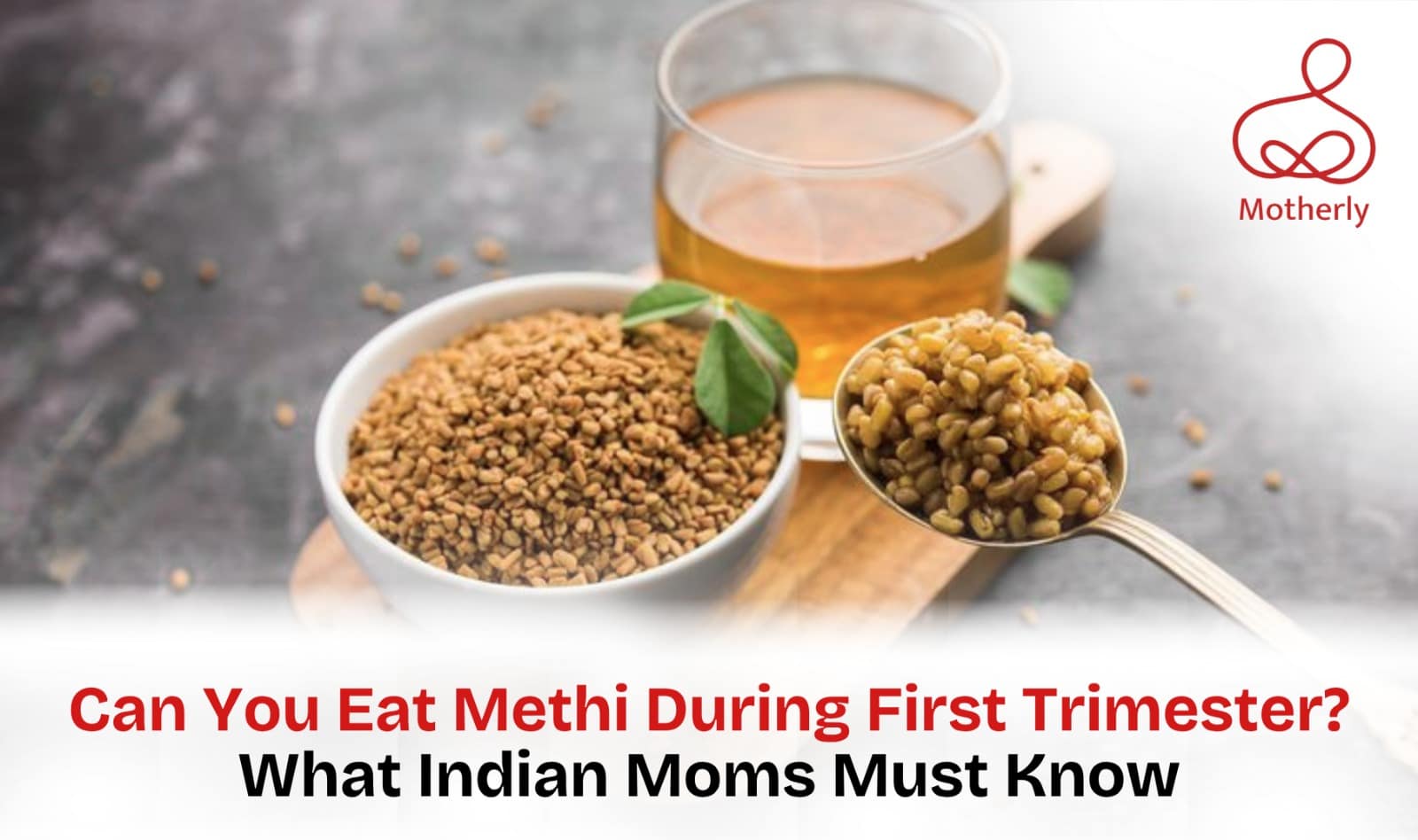
Can You Eat Methi During First Trimester? What Indian Moms Must Know
✓
Motherly Fact-Checking Standards — Every piece of content at Motherly is created with care, compassion, and a commitment to accuracy. Our team ensures every article reflects the highest standards of medical integrity, clarity, and empathy.
Methi — fenugreek — is so deeply woven into Indian cooking that most of us don’t think twice before using it. Methi paratha, methi dal, methi-murgh — it’s everywhere. But once you’re pregnant, every ingredient gets scrutinised. The short answer: methi in normal cooking amounts is generally safe during pregnancy. But in large quantities or medicinal form, it warrants caution — especially in the first trimester.
Why Is Methi Potentially Concerning in Pregnancy?
Fenugreek contains compounds called phytoestrogens and oxytocin-stimulating properties. Traditional Ayurvedic practice and several modern nutritional sources caution against large amounts of methi in early pregnancy — the concern being that it could stimulate uterine contractions. However, this concern applies to medicinal doses, not to the amount of methi in a typical Indian recipe.
Methi in Cooking vs. Methi as a Supplement
| ❌ Myth | ✔ Fact |
|---|
| A methi paratha or methi dal is dangerous in pregnancy | Culinary amounts (fresh leaves or small seed quantities in cooking) are generally safe |
| Fenugreek is a safe pregnancy supplement | Fenugreek supplements in pregnancy are NOT recommended — especially in the first trimester |
| All traditional methi remedies are safe because they’re natural | Natural does not mean safe in large doses. Medicinal quantities of methi warrant caution |
| Methi must be avoided throughout pregnancy | Culinary use in moderation is typically acceptable — check with your doctor if high-risk |
First Trimester: The Most Important Period
The first trimester is the most critical phase of foetal development — organs are forming, the neural tube closes, and the risk of pregnancy loss is highest. This is why extra caution with uterine-stimulating foods and herbs is recommended during this period. Most conservative maternal health guidance suggests limiting methi during the first trimester to normal cooking use only — and avoiding any form of methi supplement, methi tea, or medicinal methi preparation until at least the second trimester.
Safe Ways to Use Methi in Early Pregnancy
- Methi leaves (kasuri methi or fresh) in dal, sabzis, and parathas — safe in normal cooking portions
- A small pinch of methi seeds in tadka — the minimal quantity used in seasoning is well within safe limits
- Methi thepla (Gujarati style) made at home with a tablespoon or less of seeds — generally fine
- Avoid: methi seed water, methi supplements, or concentrated methi preparations
Benefits of Methi That Matter in Pregnancy
Iron Content
Fenugreek is a good source of iron, critical to prevent pregnancy anaemia — one of the most common nutritional concerns in Indian pregnancies.
Fibre
Helps manage pregnancy-related constipation, extremely common in the first trimester due to progesterone effects on the digestive system.
Blood Sugar Regulation
Important for mothers with gestational diabetes risk — methi may help moderate postprandial blood sugar spikes when used in cooking.
Anti-inflammatory Compounds
May help with general pregnancy discomfort when used in appropriate culinary quantities.
Who Should Be Especially Careful?
Women with a history of recurrent miscarriage — avoid all non-cooking methi preparations
Women with bleeding disorders or on blood-thinning medication — methi has anticoagulant properties
Women with thyroid conditions — fenugreek may interfere with thyroid medication
Women with diabetes taking medication — fenugreek has blood sugar-lowering effects that could interact
Anyone in a high-risk pregnancy — consult your gynaecologist before making any dietary changes
What About Methi After Delivery?
This is where methi truly shines. Fenugreek is one of the most well-studied galactagogues (substances that support breast milk production). If you want to increase breast milk supply after delivery, methi seeds — in tea, ladoos, or supplements under the guidance of a lactation consultant — are widely used in Indian postnatal care. This is different from using methi in the first trimester.
The same compound that warrants caution in early pregnancy may support lactation postpartum. Timing is everything with methi.
FAQs — Methi During First Trimester
I accidentally ate a lot of methi in the first trimester. Should I panic?
+
No. A single serving of methi-heavy food is not going to cause a miscarriage. The risk associated with methi applies to consistent, large-dose consumption over time — not a one-off meal. If you’re worried, mention it to your doctor at your next appointment.
Can I drink methi seed water in the first trimester?
+
It’s better to avoid this. Methi seed water is a more concentrated preparation than what you’d consume in food. In the first trimester especially, err on the side of caution and use it only in cooking.
My mother-in-law is giving me methi ladoos in the first trimester to prevent anaemia. What should I do?
+
Methi ladoos are traditionally given postpartum — after delivery — not during pregnancy. Gently explain that while methi is excellent for lactation after birth, the first trimester warrants more caution. Your doctor can advise specifically.
M
Motherly Editorial Team
Written by Chennai’s trusted maternal care platform. Motherly connects new mothers with certified lactation consultants, doulas, postnatal nannies, and gynaecologists. Visit mothrly.com to book expert support near you.