
Does Jeera Water Really Increase Breast Milk?
The moment you have a baby in India, the advice starts flowing in. Your mother brings methi laddoos, your maasi swears by ajwain chai, and almost everyone from your neighbour to your nani recommends jeera water to ‘increase your milk.’
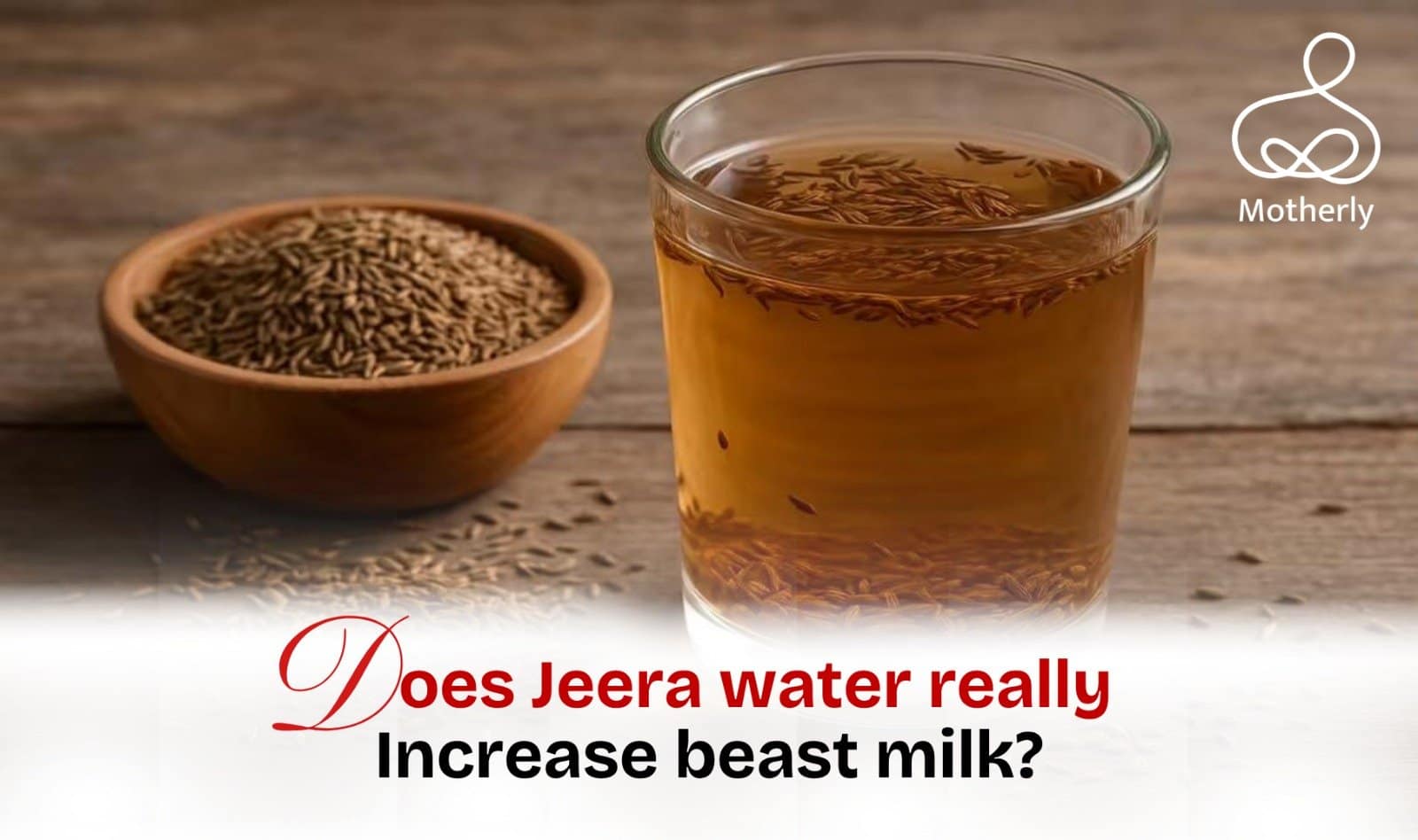
Does Jeera Water Really Increase Breast Milk? What the Science Says
The honest answer: there is some science behind jeera water’s traditional use, but it is not a magic solution. Let’s look at what the research says, what it doesn’t say, and what actually works.
What Is Jeera Water and Why Do Indians Trust It?
Jeera — or cumin seeds (Cuminum cyminum) — has been used in Indian cooking and Ayurvedic medicine for centuries. Jeera water is made by soaking cumin seeds in water overnight or boiling them briefly and drinking the strained water.
It is considered a galactagogue — a substance that promotes or increases breast milk production. Galactagogues include certain herbs, foods, and even medications, and jeera is one of the most commonly recommended herbal ones in South Asian households.
What Does Science Say About Jeera and Breast Milk?
Here is an honest breakdown of what research currently shows — and where the gaps remain.
What We Know
- Rich in iron: Cumin seeds support overall postpartum recovery. Iron deficiency can cause fatigue and indirectly affect lactation.
- Contains phytoestrogens: Plant compounds that mimic estrogen. Some researchers believe phytoestrogens can support milk-producing tissue.
- Supports digestion: Cumin has traditionally been associated with improved digestion, which may reduce colic in breastfed babies when the mother consumes it.
- Herbal galactagogue evidence: Some small studies on herbal galactagogues suggest a modest positive effect on milk volume — though most include fenugreek and fennel rather than cumin specifically.
What We Don’t Know
Myth vs Fact: Jeera Water and Breast Milk
There is a great deal of conflicting advice about jeera water and breastfeeding — especially in Indian households. Here is what the evidence actually shows.
| Myth | Fact |
|---|---|
| Jeera water alone will fix low milk supply | Supply is primarily driven by nursing frequency and effective latch, not any single food or drink. |
| The more jeera water you drink, the more milk you’ll make | Excess cumin can cause heartburn and GI discomfort; moderation is key. |
| Jeera water is a proven medical treatment for low supply | Evidence is mostly traditional; large clinical trials on cumin specifically are limited. |
| If jeera water isn’t working, you can’t breastfeed | True low supply can often be addressed effectively with professional lactation support. |
| Only jeera water matters; diet doesn’t | Overall nutrition, hydration, and feeding frequency matter far more than any single remedy. |
How to Make and Drink Jeera Water Properly
If you’d like to incorporate jeera water into your postpartum routine, here are two simple, traditional methods.
Overnight Soak (Gentle, Traditional)
Take 1 teaspoon of jeera seeds and soak in a glass of water overnight. Strain and drink on an empty stomach in the morning. This is the most traditional method — gentle, simple, and easy to build into your daily routine.
Boiled Jeera Water
Boil 1 cup of water with half a teaspoon of jeera seeds. Simmer for 5 minutes, then cool and strain. Drink warm. This can be had 1–2 times a day. Pair it with a well-balanced diet — dal, sabzi, whole grains, and plenty of fluids. Jeera water works best as a supportive addition, not a standalone solution.
Still Worried About Your Milk Supply?
A Motherly lactation consultant can assess your latch, feeding schedule, and overall nutrition to identify the root cause and build a personalised plan.
Book at Motherly →Other Indian Foods That May Support Breast Milk
While jeera gets most of the attention, there are other traditional Indian foods with equal or stronger scientific backing for lactation support.
Methi (Fenugreek Seeds)
One of the most studied galactagogues. Some studies show increased milk production with methi capsules or tea — though it can cause a maple syrup-like smell in urine and baby’s sweat. Consult a lactation expert before making it a daily supplement.
Saunf (Fennel Seeds)
Rich in phytoestrogens, fennel seeds are often used in postpartum kadhas across India. They may support both milk production and digestion in the breastfeeding mother — which means a calmer, less colicky baby.
Ajwain (Carom Seeds)
Supports digestion and milk flow — commonly used in postpartum ajwain paratha or tea. A warming spice well suited to the Indian confinement period diet.
Dalia (Broken Wheat) Porridge
Calorie-dense and iron-rich. Adequate caloric intake is directly tied to milk production — dalia is an excellent way to meet energy needs without heavy or hard-to-digest foods.
Green Leafy Vegetables (Palak, Methi Leaves)
Iron, folate, and calcium — all critical postpartum nutrients. Palak dal or sautéed methi leaves with a light tadka are excellent daily staples for breastfeeding mothers.
Milk and Ghee (in Moderation)
Traditional postpartum foods rich in calcium and healthy fats. One to two teaspoons of ghee daily contributes meaningfully to energy needs and supports recovery without excess.
What Actually Builds Breast Milk Supply (Science-Backed)
No herb or drink can compensate for the fundamentals. Here is what genuinely supports lactation — and what deserves your attention before reaching for any home remedy.
Frequent, Effective Breastfeeding or Pumping
This is the primary driver of supply. Milk production works on a supply-and-demand basis — the more your baby feeds (or you pump), the more milk your body makes. No food or drink can replicate this signal.
Adequate Caloric Intake
Breastfeeding burns approximately 400–500 extra calories per day. Your body cannot make milk without adequate fuel. This is not the time for restriction — eat enough, consistently.
Consistent Hydration
Breast milk is mostly water. Dehydration is one of the most common and most overlooked causes of reduced milk volume. Aim for 2.5–3 litres daily and keep a bottle beside you every time you nurse.
Rest and Sleep
Chronic sleep deprivation raises cortisol, which can suppress lactation. Rest whenever possible — accepting help at home is not a luxury, it is a necessity for milk production.
Skin-to-Skin Contact
Boosts oxytocin — the hormone responsible for the let-down reflex. Regular skin-to-skin time, especially in the early weeks, is one of the most powerful and completely free ways to support your supply.
Stress Reduction
Emotional wellbeing directly impacts milk flow. High stress and anxiety interfere with oxytocin release. Seek support — from family, a doula, or a mental health professional — if you are struggling.
When to Seek Lactation Support
If you’ve been trying home remedies — jeera water, methi, saunf — and still feel like your supply isn’t where it should be, it’s time to get professional help. A lactation consultant will assess:
- Your baby’s latch and suckling technique
- Whether milk transfer is actually happening effectively
- Your feeding schedule and whether it’s optimal
- Potential physiological causes of low supply — hormonal conditions, breast tissue, previous surgeries
Lactation Consultants
Full dietary and feeding assessment, latch correction, pumping guidance, and relactation support tailored to your situation.
Gynaecologists
Postnatal health assessments and hormonal support for breastfeeding mothers with complex or persistent supply concerns.
Doulas
Emotional and physical postpartum support to reduce cortisol — a key factor in healthy milk let-down and supply.
Postnatal Nannies
Trusted in-home newborn care so you can rest, eat well, and nurse more effectively without being stretched thin.
Expert Lactation Support — Motherly Is Ready
Certified lactation consultants, doulas, postnatal nannies, and gynaecologists — all in one app, available across Chennai.
Book on Motherly → Free to download · Android & iOS · Book in under 2 minutes · mothrly.comA Final Word from Motherly
India’s postpartum food traditions exist for a reason. The jeera water your grandmother recommended is not superstition — it is generations of maternal wisdom, and it has genuine nutritional value. Enjoy it as part of a warm, well-rounded diet.
But if your supply still feels low after two weeks of consistent effort — good nutrition, frequent feeds, adequate hydration — don’t wait. A Motherly lactation consultant can identify the root cause and get you back on track quickly.
Frequently Asked Questions
Motherly Editorial Team
Written by Chennai’s trusted maternal care platform. Motherly connects new mothers with certified lactation consultants, doulas, postnatal nannies, and gynaecologists. Visit mothrly.com to book expert support near you.
Stay Updated with Motherly
Keep Reading

Why Is My Breast Milk Not Coming? Causes and Easy Solutions
You're exhausted. You've been feeding your baby what feels like every hour. Your mother-in-law says feed more...

Why Is It So Hard to Lose Weight While Breastfeeding?
You're exhausted. You've been feeding your baby what feels like every hour. Your mother-in-law says feed more...

When Do You Lose the Most Weight While Breastfeeding?
You're exhausted. You've been feeding your baby what feels like every hour. Your mother-in-law says feed more...