
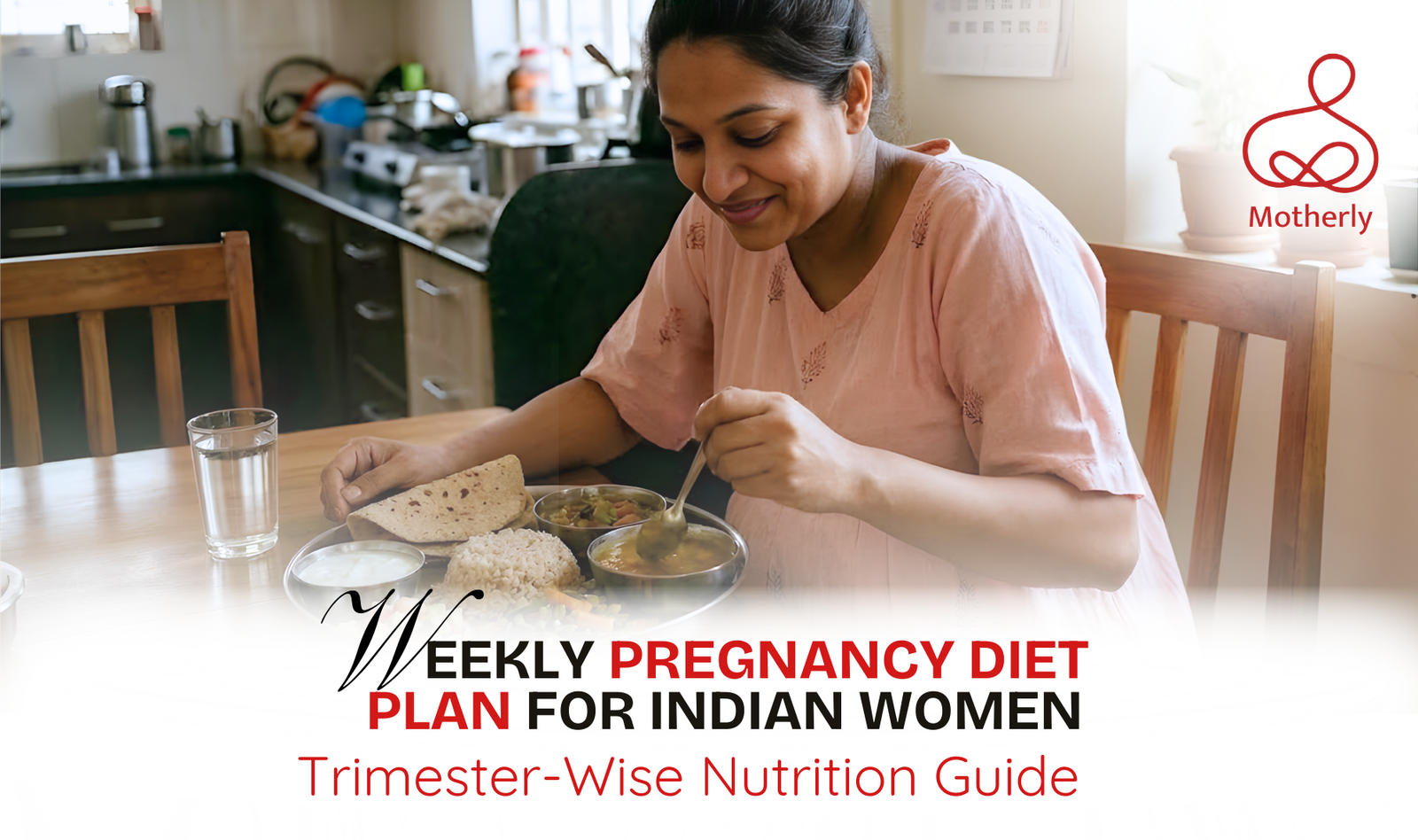
Weekly Pregnancy Diet Plan for Indian Women (Trimester-Wise Guide)
Every piece of content at Motherly is created with care, compassion, and a commitment to accuracy. Our team ensures that every article, guide, and insight reflects the highest standards of medical integrity, clarity, and empathy. To learn how we maintain trustworthy, evidence-based information that supports your parenting journey, explore our content review principles.
Weekly Pregnancy Diet Plan for Indian Women (Trimester-Wise Guide)
Pregnancy is not just about eating more. It is about nourishing wisely.
As your baby grows week by week, your body works quietly in the background—building organs, strengthening bones, developing the brain, and preparing for childbirth. A thoughtful pregnancy diet plan becomes one of the most powerful ways you can support this journey.
At Motherly, we believe nutrition should feel reassuring, not overwhelming. You are already doing so much. A structured weekly pregnancy diet plan simply helps you channel that care into balanced, nourishing meals that support both you and your baby.
How Your Baby Grows – And Why Your Diet Matters
Every trimester brings a different kind of growth.
First Trimester (Weeks 1–12)
This is the foundation stage. Cells divide rapidly, organs begin forming, and by week 8, tiny hands and feet start developing. Weight gain may be minimal, but nutritional needs are high. Folate, iron, and protein play a critical role here.
Even if appetite fluctuates due to nausea, small, consistent meals matter more than large portions.
Second Trimester (Weeks 13–26)
Often called the “golden period,” this stage brings visible growth. Your baby may gain 50–100 grams per week. Muscles strengthen, bones harden, and movement becomes more coordinated.
Your pregnancy diet plan during this phase should focus on protein, calcium, and steady iron intake.
Third Trimester (Weeks 27–40)
This is peak growth. Babies can gain up to 100–200 grams per week. Lungs mature around week 30, vernix thickens by week 34, and brain development accelerates rapidly near week 35.
Your meals now directly support weight gain, brain development, and preparation for delivery. This is where a structured weekly pregnancy diet plan truly makes a difference.
If you would like more detailed guidance for the final months of pregnancy, you can also read our third trimester pregnancy diet plan, where we explore late-pregnancy nutrient needs, portion balance, and meal timing in greater depth.
Why Indian Mothers Need Balanced Nutrition More Than Ever
Recent data shows that nearly one in four pregnant women in India may develop gestational diabetes. Additionally, over half of pregnant women experience anemia.
These numbers are not meant to alarm you. They simply highlight why balance matters.
At Motherly, we focus on practical guidance rooted in Indian home cooking. You do not need imported superfoods. You need consistency, timing, and nutrient diversity.
Essential Nutrients in a Pregnancy Diet Plan
Instead of thinking in terms of “more food,” think in terms of “right food.”
Protein
Supports muscle growth, organ development, and placental strength.
Sources include dal, paneer, curd, tofu, rajma, chole, nuts, and seeds.
Iron
Prevents anemia and supports oxygen supply to your baby.
Include spinach, beetroot, lentils, jaggery in moderation, and dates.
Omega-3 Fatty Acids
Critical for brain and visual development.
Walnuts, flaxseeds, and chia seeds are excellent vegetarian sources.
Calcium
Builds strong bones and teeth.
Milk, curd, ragi, sesame seeds, and paneer are reliable options.
Complex Carbohydrates
Provide sustained energy and help regulate blood sugar.
Choose whole wheat roti, millets, brown rice, and oats over refined flour.
A good pregnancy diet plan brings all these nutrients together daily rather than focusing excessively on one.
What to Eat and When to Eat: Sample Weekly Pregnancy Diet Plan
Here is a simple, balanced framework you can rotate weekly:
Time of Day | What to Eat | Why It Helps |
Early Morning | Warm water + 4 soaked almonds + 1 walnut | Gentle digestion support and healthy fats |
Breakfast | Vegetable poha/upma or oats + curd | Balanced carbs and protein |
Mid-Morning | Seasonal fruit + coconut water | Hydration and vitamins |
Lunch | 2 rotis + dal + green sabzi + salad + curd | Iron, protein, fiber |
Evening Snack | Roasted chana/makhana + herbal tea | Light protein-rich snack |
Dinner | Khichdi or dal + vegetable + paneer/tofu | Easy digestion and protein |
Bedtime | Haldi milk (if tolerated) | Calcium and relaxation |
This structure forms the base of a healthy weekly pregnancy diet plan. You can rotate vegetables, pulses, and grains to maintain variety.
While following a weekly pregnancy diet plan, flexibility is important. Some days you may feel hungrier, especially during the third trimester, while other days appetite may reduce. Instead of forcing fixed quantities, listen to your body’s signals while maintaining nutritional balance. Rotating seasonal vegetables, alternating between millets and whole wheat, and including different lentils throughout the week helps prevent monotony and improves micronutrient diversity.
Planning meals at the beginning of the week can also reduce stress. When ingredients are stocked and meals are pre-decided, it becomes easier to stay consistent even during busy or low-energy days. A structured pregnancy diet plan works best when it feels sustainable, not restrictive.
Managing Blood Sugar and Preventing Anemia
If you are at risk for gestational diabetes, spacing meals every 2–3 hours helps stabilize blood sugar levels. Avoid long gaps without food.
For anemia prevention:
- Pair iron-rich foods with vitamin C sources like lemon.
- Avoid tea or coffee immediately after meals.
- Follow prescribed supplements consistently.
A balanced pregnancy diet plan protects you from preventable complications while supporting steady fetal growth.
Healthy Weight Gain During Pregnancy
Weight gain varies by body type, but generally:
- First trimester: 1–2 kg
- Second trimester: 4–5 kg
- Third trimester: 5–6 kg
Excessive restriction is not helpful. Overeating is not helpful either. Steady, mindful nutrition works best.
Remember, you are nourishing two bodies — but that does not mean doubling portions. It means doubling care.
Foods to Limit
Some moderation is necessary:
- Refined sugar and sweets
- Deep-fried snacks
- Packaged juices
- Excess tea or coffee
- Highly processed foods
This is not about guilt. It is about stability.
A Gentle Reminder from Motherly
You are already doing something extraordinary.
A structured weekly pregnancy diet plan is not about perfection. Some days will feel easier than others. Appetite may fluctuate. Energy levels may dip.
Consistency matters more than a single meal.
For more trimester-specific guidance, especially as you enter the final stretch, our third trimester pregnancy diet plan offers additional support tailored to late-pregnancy nutritional needs.
At Motherly, we encourage realistic nutrition that fits into Indian kitchens, busy schedules, and real life. With balanced meals, proper hydration, and mindful supplementation, you are giving your baby the best possible start.
Trust your body. Support it with nourishment. And remember — you are doing beautifully.
In this article
Stay Updated with Motherly
Keep Reading
The Complete Vegetarian Pregnancy Diet Plan All 9 Months
A complete vegetarian pregnancy diet plan guide crafted for every mother-to-be in India
Third Trimester Pregnancy Diet Plan: What to Eat, What to Avoid & Essential Nutrients
The third trimester is a critical phase of pregnancy when your baby grows rapidly in weight, brain development, and organ maturity. At the same time, your body prepares for labor, breastfeeding, and recovery. A...
Weekly Pregnancy Diet Plan for Indian Women (Trimester-Wise Guide)
As your baby grows week by week, your body works quietly in the background—building organs, strengthening bones, developing the brain, and preparing for childbirth. A thoughtful pregnancy diet plan becomes one of the most...