
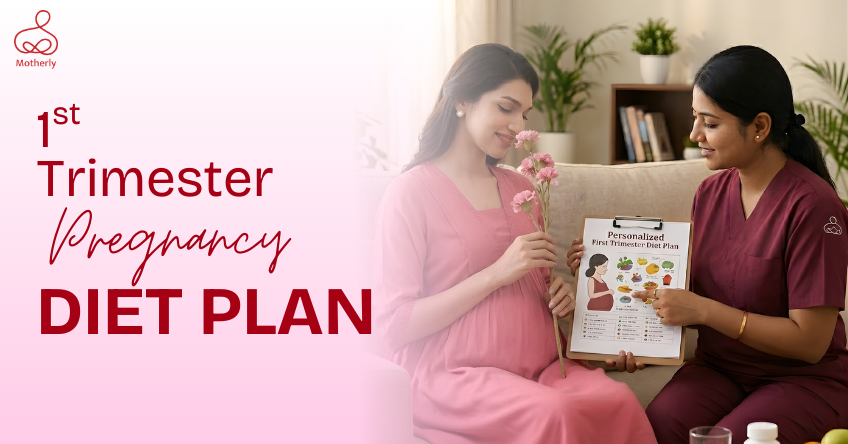
1st Trimester Pregnancy Diet Plan: What to Eat, What to Avoid & How to Structure Your Day
Every piece of content at Motherly is created with care, compassion, and a commitment to accuracy. Our team ensures that every article, guide, and insight reflects the highest standards of medical integrity, clarity, and empathy. To learn how we maintain trustworthy, evidence-based information that supports your parenting journey, explore our content review principles.
1st Trimester Pregnancy Diet Plan: What to Eat, What to Avoid & How to Structure Your Day
The first trimester doesn’t always look dramatic from the outside. But internally, your body is working constantly.
You might feel exhausted by late afternoon. You may suddenly dislike foods you once loved. Nausea can appear without warning. Some mornings feel manageable — others don’t.
And somewhere between all of this, you’re wondering whether your food choices are actually supporting your baby.
That uncertainty can feel heavier than the nausea itself.
In the first 12 weeks, major development happens quietly. The neural tube forms. The placenta begins developing. Hormonal shifts influence digestion, appetite, and even mood.
This is why having a practical pregnancy diet plan during early pregnancy matters — not because you need to eat more, but because what you eat now supports foundational growth.
At Motherly, we believe nutrition guidance should reduce stress, not increase it. Instead of overwhelming rules, let’s focus on what truly matters.
Do You Really Need to “Eat for Two”?
This is one of the most common misconceptions.
In the first trimester:
- Calorie needs do not significantly increase.
- Most additional energy requirements begin in the second trimester.
- For many women, appetite actually decreases because of nausea.
If you cannot eat large meals right now, that is completely okay.
Rather than increasing portion sizes, focus on consistency:
A balanced approach includes regular meals, nutrient-dense foods, adequate protein, and proper hydration.
Quality matters more than quantity in these early weeks.
It’s reassuring to know that you do not need to double your plate overnight.
Key Nutrients Your Body Needs in the First Trimester
Protein (Around 46 g per Day)
Protein requirements in early pregnancy remain close to pre-pregnancy levels.
- Recommended intake: 0.8 g per kg body weight
- Approximate daily target: 46 g
- Additional requirement in first trimester: minimal
Protein supports early tissue formation, placenta development, and hormonal balance.
Vegetarian-Friendly Sources
Moong dal, masoor dal, paneer, curd, tofu, roasted chana, nuts, seeds, and besan chilla.
Instead of calculating every gram, aim to include protein in each main meal. Small additions throughout the day make a meaningful difference.
Folic Acid (400 µg Daily)
Folic acid is critical during the first trimester.
The neural tube closes around week 4 — often before many women even realize they are pregnant. That is why early supplementation is strongly recommended.
Recommended intake:
- 400 micrograms (0.4 mg) daily
- From preconception until at least 12 weeks
Natural Food Sources
Spinach, methi, lentils, rajma, black chana, and fortified cereals.
Food helps, but supplementation is usually necessary to meet the recommended level.
Iron (30–60 mg Daily)
Blood volume increases significantly during pregnancy, which increases iron demand — even in early weeks.
Iron supports:
- Oxygen delivery to the baby
- Prevention of anemia
- Placental growth
Iron-Rich Vegetarian Sources
Jaggery, garden cress seeds, spinach, kala chana, ragi, and sesame seeds.
Combine iron-rich foods with vitamin C (lemon, amla, citrus fruits) to improve absorption.
Globally, anemia affects a large percentage of pregnant women. Early supplementation under medical supervision helps prevent complications later.
Hydration (2–3 Liters Daily)
Hydration is often underestimated.
Water supports:
- Amniotic fluid levels
- Blood circulation
- Nutrient transport
- Digestion
- Temperature regulation
Aim for:
8–12 cups per day, or more if vomiting or living in hot climates.
If plain water feels difficult, include:
Coconut water, buttermilk, lemon water, or light soups.
Sip slowly throughout the day instead of drinking large amounts at once.
At Motherly, we always remind women that steady habits are more sustainable than drastic changes.
Sample 1st Trimester Pregnancy Diet Plan (With Timings)
This structure is flexible. Adjust based on appetite, culture, and doctor’s advice.
Time | Food Suggestions | Why It Helps |
Early Morning (7–8 AM) | Warm water + soaked almonds | Gentle hydration & energy |
Breakfast (8:30–9:30 AM) | Vegetable poha / Idli with sambar / Besan chilla with curd | Balanced carbs + protein |
Mid-Morning (11–12 PM) | Fruit + roasted chana | Fiber + iron support |
Lunch (1–2 PM) | Roti or rice + dal + sabzi + curd | Balanced nutrients |
Evening Snack (4–5 PM) | Coconut water / Sprouts / Soup | Light nutrition + hydration |
Dinner (7–8 PM) | Khichdi / Roti + paneer bhurji + vegetables | Easy digestion |
Bedtime | Warm milk (if tolerated) | Calcium + comfort |
If Nausea Is Severe
Instead of forcing food:
- Eat dry snacks before getting out of bed
- Avoid strong cooking smells
- Choose bland foods temporarily
Small adjustments make daily life easier.
Foods to Include
Rather than repeating explanations, here is a simplified structure:
Leafy Greens
Spinach, methi — Folate + iron
Lentils & Legumes
Moong, masoor — Protein
Dairy
Milk, curd, paneer — Calcium + protein
Whole Grains
Roti, brown rice — Sustained energy
Nuts
Almonds, walnuts — Healthy fats
Vitamin C Foods
Amla, citrus fruits — Improve iron absorption
These food groups together support protein intake, blood production, bone development, and overall maternal health.
Foods to Avoid or Limit
Avoid or limit:
Raw or undercooked meat — Infection risk
Unpasteurized dairy — Listeria risk
High-mercury fish — Nervous system risk
Excess caffeine — Keep below 200 mg/day
Alcohol — No safe level in pregnancy
Unwashed produce — Infection risk
Safe cooking and hygiene are just as important as nutrient selection.
Managing Common First Trimester Symptoms Through Diet
Nausea
- Small frequent meals
- Dry toast or khakra in the morning
- Ginger or lemon water
Fatigue
- Iron-rich meals
- Adequate hydration
- Avoid skipping meals
Constipation
- Fiber from fruits and whole grains
- Plenty of water
- Light movement like walking
Your pregnancy diet plan should adapt to symptoms not ignore them.
Supplements Still Matter
Even with balanced food:
- 400 µg folic acid
- 30–60 mg iron
are usually recommended under medical supervision.
Food builds the foundation. Supplements fill gaps.
Final Takeaway
The first trimester is powerful even if it feels quiet.
You may not feel strong every day.
You may not eat perfectly every day.
That is normal.
What truly matters is consistency , regular meals, adequate hydration, iron and folic acid supplementation, and balanced protein intake.
A thoughtful pregnancy diet plan during early pregnancy creates stability for the months ahead.
At Motherly, our goal is to provide guidance that feels calm, practical, and realistic.
You do not need perfection.
You need steady, informed choices.
Every small step you take today contributes to long-term maternal and baby health.
In this article
Stay Updated with Motherly
Keep Reading
Second Trimester Pregnancy Diet Plan: What to Eat, What to Avoid & Essential Nutrients
The second trimester is often considered the most stable and comfortable phase of pregnancy. Energy levels improve,...
1st Trimester Pregnancy Diet Plan: What to Eat, What to Avoid & How to Structure Your Day
The first trimester doesn’t always look dramatic from the outside. But internally, your body is working constantly....
Pregnancy Diet Plan: A Complete Guide to Nutrition, Meal Plan & Essential Nutrients
During pregnancy, most women naturally become more mindful about what they eat and how their food choices...